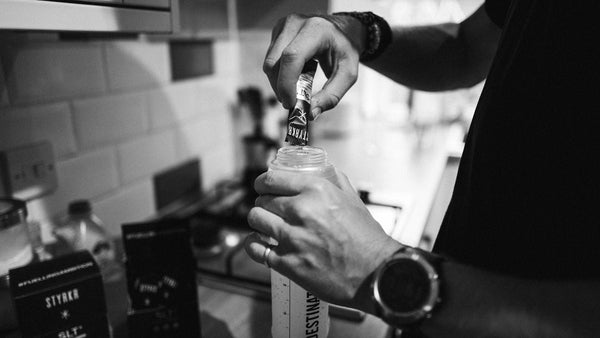
Should you take electrolytes before or after a workout?
Pre, during AND post - the timing windows that matter for sodium and fluid balance.

By Ella Ransley, Sport Science Lead
- Published
- 6 min read
Key takeaways
-
Electrolytes are essential for achieving proper fluid balance in the body
-
Sodium, potassium, magnesium, and calcium help support muscle and nerve function and help manage fatigue
-
During exercise, you lose electrolytes via sweat
-
If running or cycling for 75 minutes or longer, consider an electrolyte supplement before or during exercise
-
For demanding conditions, like a challenging workout or humid conditions, electrolytes before or during can help support performance
-
Consider using electrolytes to support recovery after a session if you did not use them before or during (and you lost more sweat than anticipated)

Improve performance, reduce cramps, and speed up recovery with electrolytes.
 If you’ve ever felt sluggish, fatigued, or had muscle cramps during a run, cycle, or other endurance activity, electrolytes (or a lack of them) could be to blame.
Electrolytes are vital for maintaining proper hydration, supporting muscle and nerve function, and helping your body perform at its best. When exercising in hot or humid conditions (as well as other extremes), your body produces more sweat to cool you down.
However, you lose electrolytes through sweat, which can quickly lead to fluid imbalance and dehydration. Water alone is not sufficient for ensuring proper endurance performance.
This blog post explains why electrolytes are essential for athletes and when you should use them.
What you will learn:
-
What electrolytes are and why they are essential for athletes
-
When to use electrolytes (before, during, or after exercise)
-
What to do if you’re a salty sweater or exercising in extreme conditions
What are electrolytes?
Electrolytes are minerals that are essential for a variety of bodily functions, like regulating fluid balance and hydration, and supporting proper muscle and nerve function.
During exercise, such as running or cycling, the main electrolytes lost via sweat are sodium, potassium, magnesium, and calcium.
If you don’t replace the electrolytes you've lost, you may see a decrease in performance. Fatigue, muscle and leg cramps, and dehydration are all possible symptoms of an electrolyte deficiency during exercise.
Why are electrolytes important?
When you sweat, you don’t just lose water — you also lose electrolytes, especially sodium/salt. This is why you can sometimes taste salt when exercising, especially if you’re a salty sweater.
You also lose potassium, magnesium, and calcium, which play key roles in muscle function and fatigue management.
“For longer sessions (over 75 minutes), key high-intensity sessions, or double training days, electrolyte replacement may be needed,” says Jena Brown, an endurance dietitian and owner of Victorem Performance Nutrition in Brenham, Texas.
Brown explains that your daily diet and fueling plan also influence how much sodium and electrolytes you need. Athletes who consume more processed foods typically get higher sodium intakes and may need less from electrolyte mixes. On the other hand, those following a whole-food-focused diet naturally get less sodium and may benefit from additional supplementation.
“A recent review highlighted that effective hydration is not about sodium alone, but about the interplay between sodium and fluid balance [3]. Sodium helps maintain plasma volume and stimulates thirst, supporting more effective ad libitum fluid intake. In practice, this means your fluid replacement — ideally guided by your sweat rate — should complement, not replace, a targeted strategy.”
Related: How much sodium do you lose in sweat? – and what to do about it.
Continue reading to find out when you should take electrolytes to best suit your performance and recovery needs.
When to have electrolytes before a workout
 If you’re running or cycling in hot or harsh conditions, consider using electrolytes before your session. The same applies if you’re doing an intense session, like a long ride with intervals or a run with half-marathon pace efforts.
Additionally, if you’re a heavy or salty sweater, stocking up on electrolytes can help support proper fluid balance and hydration.
Brown recommends short-term sodium loading with 275-420mg per 100 mL of fluid in the four hours before exercise. Added electrolytes may help improve fluid retention when you anticipate high losses and limited opportunity to replace fluids, like a hot and demanding interval session.
“If you want to test whether preloading improves your performance, practice during training and start at the lower end to minimise the risk of GI distress.”
“Water alone is not sufficient for ensuring proper endurance performance.”
During a workout
Vigorous exercise and hot and humid weather increase sweat production, which contains water and electrolytes. Sweat losses increase electrolyte deficits, which must be replenished to establish euhydration (normal total body water)[3].
Brown highlights a recent review that recommends sodium replacement during exercise that lasts 4 hours[2]. However, in practice, she recommends athletes replace sodium and electrolytes during shorter sessions. Otherwise, those with high sweat rates or heavy training blocks can develop an accumulative sodium deficit over time.
A sodium and electrolyte deficit negatively affects fluid balance. It also impacts recovery ability and performance.
Adding electrolytes, like SLT07, during intense exercise or other demanding conditions helps support your performance.
For endurance athletes, consider adding electrolytes to your hydration during rides lasting 75 minutes or long runs, especially when conditions are intense.
Taking electrolytes during endurance exercise also supports recovery, mainly by preventing dehydration and maintaining proper fluid balance.
Having adequate electrolytes post-exercise supports nerve transmission, muscle coordination, and overall recovery. It helps delay the onset of fatigue and enables athletes to sustain performance during subsequent training sessions or multi-day events [4], like the Silk Road Mountain Race or the Ultra-Trail du Mont-Blanc (UTMB).
For more demanding conditions, like the above races or very hot or humid weather, or if you’re a salty or heavy sweater, consider a high-strength electrolyte supplement like SLT+, explicitly designed for endurance athletes.


You will finish your order on thefeed.com. Opens in a new tab.
When to have electrolytes after a workout
If your run, swim, cycle, weights session, or other exercise session was less than 75 minutes and did not cause you to sweat much, you likely do not need extra electrolytes after a workout. But this does depend on your diet (i.e., whether you get a lot of sodium).
On the other hand, if you went for a run or cycle (less than 75 minutes) and it ended up being hotter or more intense than you planned, perhaps you sweated more; you may benefit from adding electrolytes after your workout.
Research also shows that athletes with high sweat rates or those training in challenging conditions may benefit significantly from adding electrolytes into their recovery protocols [1].
—
References:
-
Garrison, S.R., Korownyk, C.S., Kolber, M.R., Allan, G.M., Musini, V.M., Sekhon, R.K. and Dugré, N., 2020. Magnesium for skeletal muscle cramps. Cochrane Database of Systematic Reviews, (9).
-
McCubbin, A.J., 2025. Sodium intake for athletes before, during and after exercise: review and recommendations. Performance Nutrition, 1(1), pp.1-22.
-
Shirreffs, S.M. and Sawka, M.N., 2011. Fluid and electrolyte needs for training, competition, and recovery. Journal of Sports Sciences, 29(sup1), pp.S39-S46.
-
Wang, L., Meng, Q. and Su, C.H., 2024. From food supplements to functional foods: Emerging perspectives on post-exercise recovery nutrition. Nutrients, 16(23), p.4081.
Fuel for this guide
-
SLT07 Citrus Hydration Tablets 1000MG Sodium
Buy from The Feed
You will finish your order on thefeed.com. Opens in a new tab.