What to eat during a long run
30-60g of carbs per hour - the gel, chew, drink and real-food options that work in your gut.

By Ella Ransley, Sport Science Lead
- Published
- 5 min read
Key takeaways
-
Aim to consume 30-60g of carbs per hour for runs longer than 60-75 minutes
-
If running for less than 60-75 minutes, you likely do not need to eat when running
-
You may benefit from upwards of 90g (but you will need to test this)
-
Experiment with your run nutrition to find what works best for you (energy gels, bars, bananas, etc.)
-
Avoid foods high in fat, fibre, and protein before running to prevent stomach upset
-
Don’t forget to replenish energy levels after running to support recovery

Avoid running out of energy and sustain performance.

It’s Sunday morning.
You wake up, microwave a bowl of porridge, and make a cup of tea or coffee.
If you remember (which you rarely do), you gulp a few sips of water. You’re out the door and start your long run.
30 minutes in, you feel good.
60 minutes in, you feel good.
75 minutes in, you’re sitting on the side of the pavement and don’t know what went wrong.
This is known as “hitting the wall”—when you run out of energy and can no longer sustain your intensity.
Hitting the wall is common in half marathon and marathon training and on race day.
To avoid running out of energy, you need to get your nutrition right. That means eating properly before AND during your long run.
This article explains what you need to know about long run nutrition, including when to eat and what foods to take with you.
In this article, we cover:
-
Why you need to eat during long runs
-
What to eat (and what to avoid)
-
The importance of hydration
-
Tips on what to eat before running
Do I need to eat during a long run?
I’ll start by saying every runner is different.

However, as a general rule of thumb, you want to eat during long runs that exceed 60-75 minutes.
The American College of Sports Medicine (ACSM) recommends consuming 30-60g of carbohydrates per hour to fuel your body with the necessary glycogen to finish your run with less fatigue and better performance.
For runs upwards of 2-3 hours, you likely want to consume closer to the 60g/h recommendation, according to a 2014 study.
Proper nutrition during your long run can also stop you from hitting the wall or bonking—when you run out of energy and cannot continue.
How long can you run without fuel?
If you run for less than 75 minutes, you most likely do not need to eat when running.
Alternatively, if running upwards of 75 minutes to 3 + hours, you should have a consistent carb intake to give your body the energy to maintain performance and stop you from hitting the wall.
What food to eat on long runs?
Okay, now that you know you should eat on long runs—what should you eat?
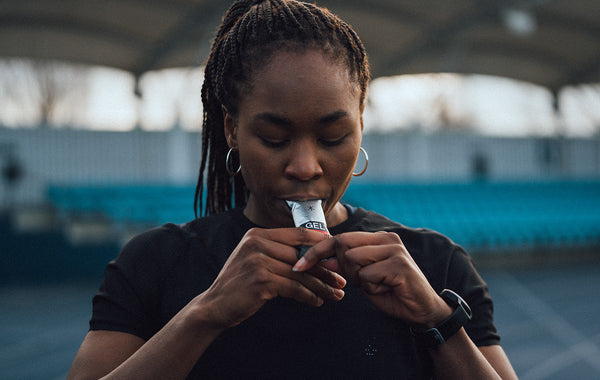
Most runners prefer easy-to-consume carbohydrates like energy gels, bananas, sweets and chews, or energy bars.
The trick here is to find out what works best for you and your stomach. While one runner may thrive on only taking energy gels or sweets, another may get an upset stomach.
Find what works for you. The only way to do that is by experimenting.
How much to eat during long runs?
Easy-to-digest carbs in small quantities are the best foods to eat during a long run.

This isn’t a sit-down meal.
Aim for 30-60g of carbs per hour for runs longer than 60 to 75 minutes. You may benefit from upwards of 90g—but you will need to experiment with this.
I’ve included a table below with example foods that meet the suggested carb intakes for a mix of long run durations.

“Long runs aren't just for fitness. They're how you train your gut to absorb fuel at race effort.”
What foods to avoid while running?
Again, everyone is different.
But there are general guidelines to help prevent stomach upset.
For example, avoid:
-
Spicy foods
-
Fatty foods
-
Foods high in fibre
-
Dairy products
-
Fried foods
-
Protein bars
-
Alcohol
The above food items are more likely to cause stomach upset and discomfort. Some may contribute to cramping, bloating, and even dehydration.
What to drink on a long run?
For long runs less than 60-75 minutes, you likely do not need to drink fluids during your run. If it’s a hot day, it’s a good idea to bring a small handheld bottle of water and maybe even some electrolytes.
On those longer duration runs, aim to drink 150-200ml every 20 ish minutes. This will help prevent dehydration and maintain performance. It will also help with recovery.
Furthermore, make sure to drink plenty before and after running. Aim for at least 500ml in 1 to 2 hours before running, as found by one study. You won’t perform your best if you start dehydrated.
Likewise, after running, replace the water lost via sweat.
We have an excellent article on why hydration is important in sport, which includes a guide on how to calculate your sweat rate to ensure proper recovery after running or other exercise.
A quick note on pre-long run nutrition
Before exercise, including your weekly long run, the ACSM recommends a meal or snack relatively low in fat and fibre to minimise stomach upset and discomfort.
Additionally, consume a moderate amount of carbs to maximise the maintenance of blood glucose. Always stick to foods you are familiar with to minimise any last-minute stomach upset.
Aim to eat 1-4 hours before exercise. Some runners may find eating any sooner may cause stomach discomfort.
Experiment with your long run nutrition to find out what works best for you.
Recommended: What to eat before a long run.
For more advice on how to fuel your training, view the Training and Nutrition Hub.