FUELING, HYDRATION and RECOVERY ADVICE
Daily macros, session-day fuelling, race-week protocols - the full nutrition framework.

By Ella Ransley, Sport Science Lead
- Published
- 3 min read

Whether you’re training for performance, building consistency, or just trying to start the year strong, what you eat and drink is just as important as the time you spend in the gym. Fueling, hydration, and recovery aren’t optional - they’re the foundation that lets your body perform, adapt, and improve.
In this guide, we break down how to fuel before, during, and after training, the best hydration strategies to stay at your peak, and the recovery practices that help you bounce back stronger.

Fuelling for endurance training
Before training:
-
Carbohydrates + protein (Porridge, toast, yogurt, fruit)
-
Early session? A small carb snack still improves performance.
During training:
-
Under 60 minutes - fueling is optional here, your glycogen stores should be topped up enough to carry you through.
-
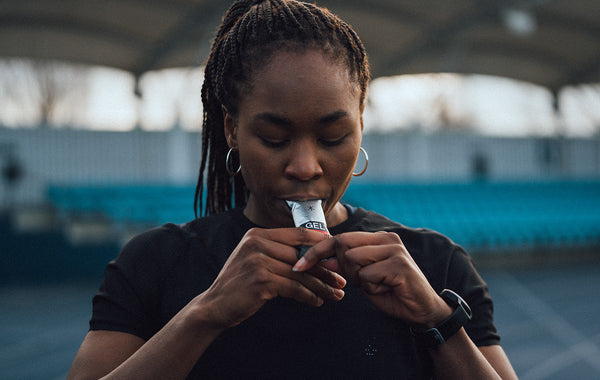
Over 60–75 minutes -fuel every session. Aim for 30–90g carbohydrate per hour. (GEL50/30, MIX60/90)
It’s important to recognise that this high intake of carbohydrates during sessions doesn’t come straight away, it’s important to train your gut to tolerate higher quantities of carbohydrates. This blog goes into further detail.

Hydration for endurance athletes
Before training:
Arrive hydrated by pre-loading with electrolytes. It’s important that this is a strong dose of electrolytes such as our SLT+ to increase your blood plasma volume which helps to cool you down and deliver oxygen to your muscles. It allows you to absorb as much fluid as possible during your session.
During training:
-
Under 60 minutes: drink to thirst, listening to your body is super important as it does a pretty good job of telling you when to drink!
-
Over 60–75 minutes: plan your intake
Aim for around 400–750 ml per hour, adjusting for effort and conditions. Include electrolytes for longer or indoor sessions (SLT07). Hydrating for sessions is very individual, we all loose a different amount of sodium and fluid depending on conditions, so please consider your own data first! -
Use SLT07 mild citrus if you are a saltier sweater, us SLT07 Berry if you’re less salty! If it tastes salty to you.

“What you eat and drink is just as important as the time you spend in the gym.”
Recovery essentials for endurance athletes
Carbohydrates
-
Think of your body like an engine, once you’ve used the fuel-it needs to be replaced, and only so much of it can be replenished during training, fueling yourself after is super important.
-
The ISSN states that athletes training to improve their performance need to consume 5-8g of carbohydrate per kilo of bodyweight each day to maintain glycogen stores compared with 3-5g per kg for those that are active but not training for performance.
-
However, to really maximise your glycogen stores, focusing on 8-12g/kg of bodyweight will allow you to recover fully.
-
The best dosage for post exercise carb intake is 1.2g/kg each hour for 4 hours post exercise.
-
High glycaemic index foods like the BAR30/50 can also increase the absorption of these carbohydrates vs low glycaemic, more fibrous foods.
Protein
-
It is well known that athletes require a higher daily protein intake of between 1.2-2.3 g/kg of protein compared to non-exercising individuals to facilitate recovery and training adaptations.
-
It is quite normal for athletes to consume at least 2-4 times more protein than a non-exercising athlete to support training goals.
-
Using the 4:1 ratio with carbohydrate to protein post training helps spike insulin which aids carbohydrate absorption. (BAR+, STYRKRTHON)
Hydration
-
It’s really important to replenish your losses through sweat post exercise, especially if you are looking to train again later that day.
-
Using a strong electrolyte like SLT+ to do so is vital.
-
Continuing to stay hydrated by sipping on water throughout the day is also important even when it’s cold!

Training hard is only part of the equation - fueling, hydration, and recovery turn effort into real results.
Consistency beats intensity. Small, smart choices every day - what you eat, how you hydrate, and how you recover compound over time to give you the performance, energy, and recovery you’re aiming for.
Ready to put it into practice? Check out our Styrkr products to support your fueling, hydration, and recovery: HERE.